


Rajkot – The Cultural and Commercial Heart of Saurashtra, Gujarat, India |
|
 |
|
Itinerary |
|
Understanding Rajkot as a Destination Rajkot’s strength lies in its accessibility and structure. Unlike larger metropolitan cities, it allows visitors to experience multiple facets of Gujarat within a limited timeframe, without long travel hours or logistical complexity. The city caters effectively to:
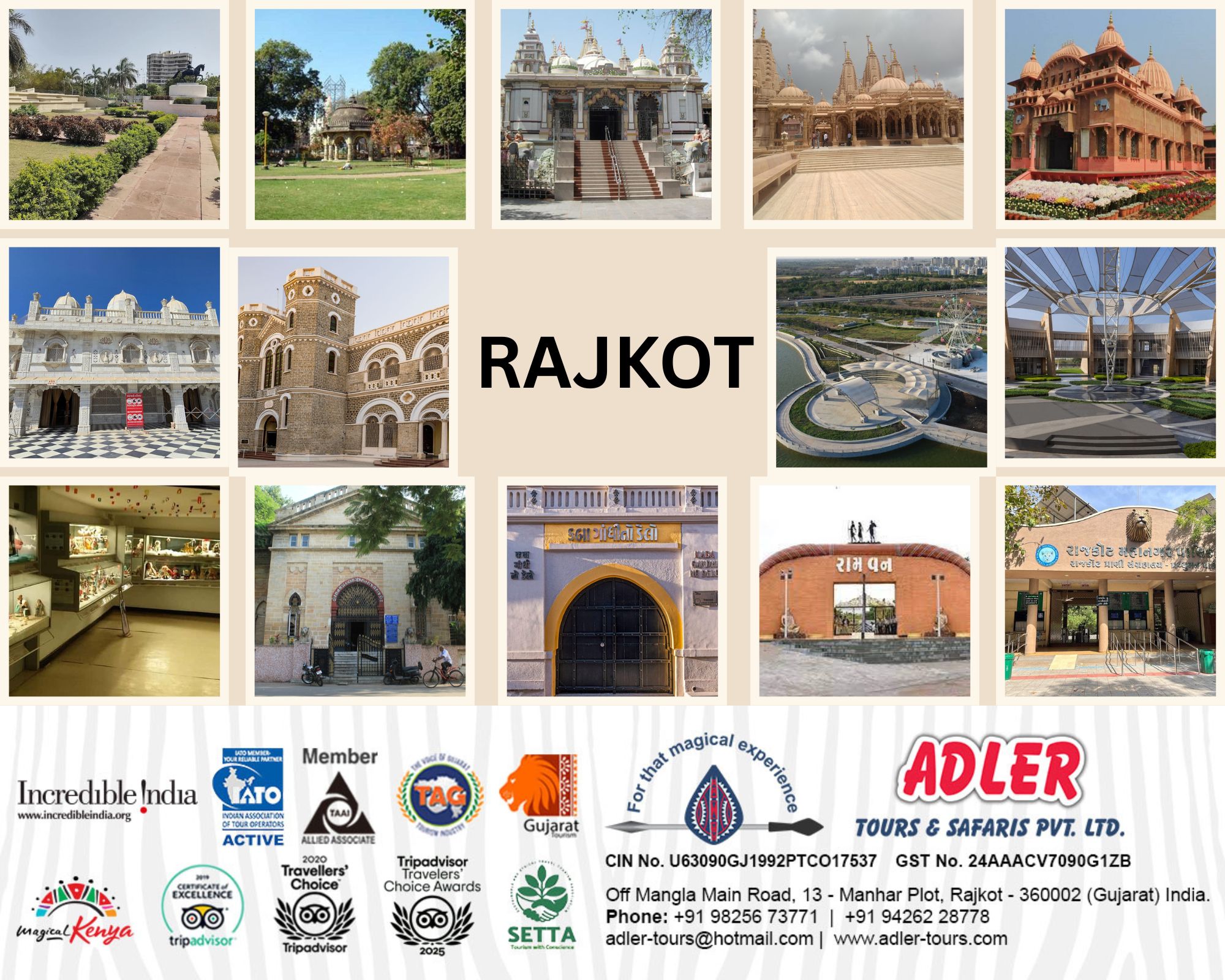
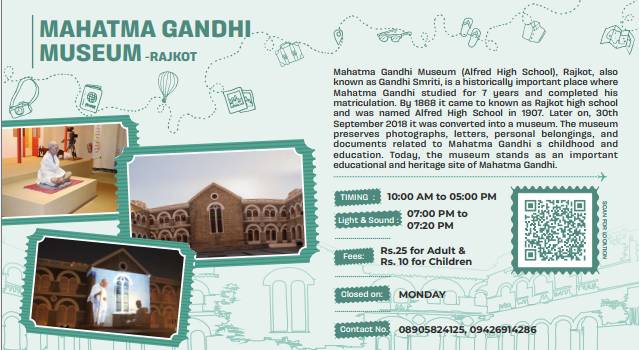
With well-developed roads, organized public spaces, and a growing hospitality sector, Rajkot offers a comfortable and efficient travel experience. Gandhian Legacy and Historical Significance Rajkot holds a distinguished place in Indian history due to its association with Mahatma Gandhi, who spent a significant part of his early life here. The Mahatma Gandhi Museum, formerly known as Alfred High School, is where Gandhiji completed his education. Today, it has been transformed into a modern museum that presents a well-curated narrative of his formative years through photographs, personal belongings, and archival material.
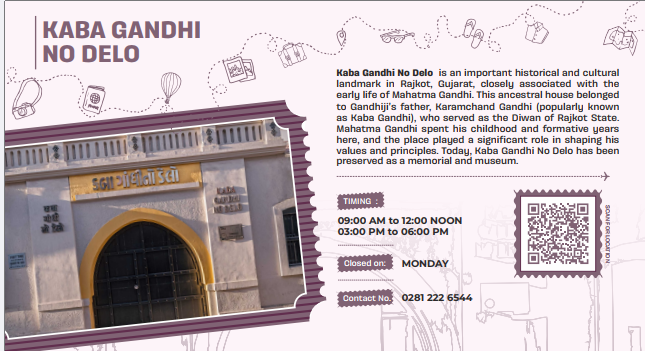
Complementing this is Kaba Gandhi No Delo, the ancestral residence of Gandhiji’s family. Preserved in its original simplicity, it provides a more intimate understanding of the environment that shaped his values and philosophy.
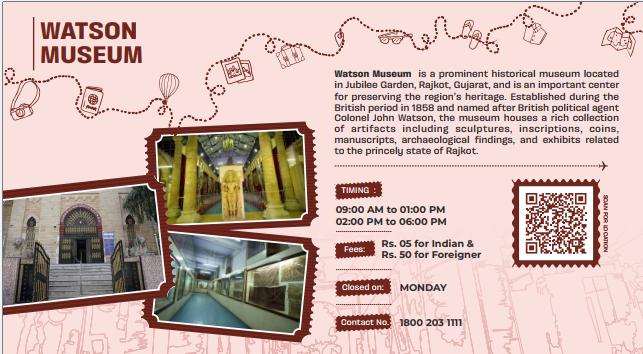
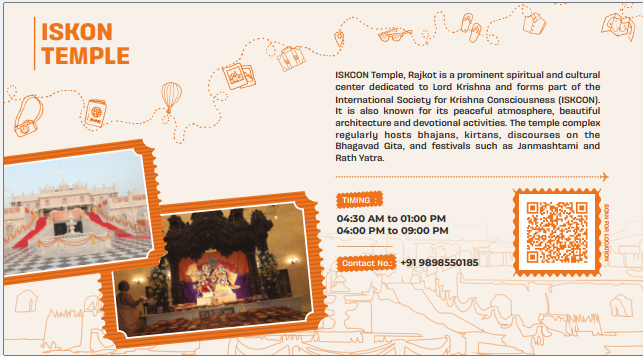
Another important cultural institution is Watson Museum, located in Jubilee Garden. Established during the colonial period, the museum houses a rich collection of artifacts, sculptures, coins, and manuscripts that trace the history of the region and the princely state era. Together, these sites form a strong historical circuit within the city, making Rajkot an important destination for heritage tourism. Spiritual Landscape of Rajkot Rajkot offers a well-rounded spiritual experience, with temples and institutions that are both significant and accessible. The ISKCON Temple Rajkot is one of the city’s spiritual centers, known for its structured devotional activities, peaceful environment, and vibrant festival celebrations. It attracts both devotees and tourists seeking a calm and organized spiritual experience.
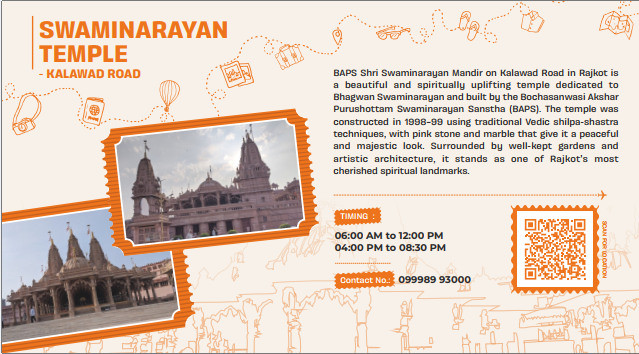
The BAPS Swaminarayan Mandir Rajkot on Kalawad Road is another major landmark, built with traditional architectural techniques using marble and stone. The temple’s design, cleanliness, and disciplined environment make it a highlight for visitors.
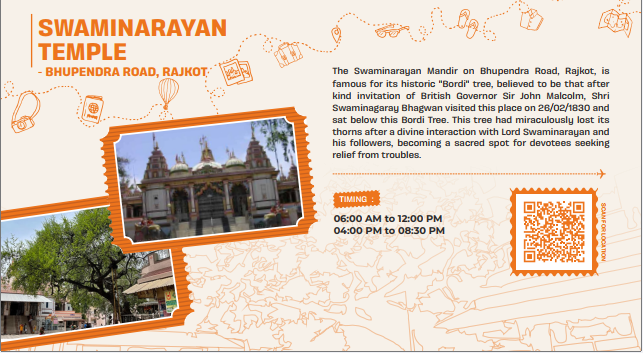
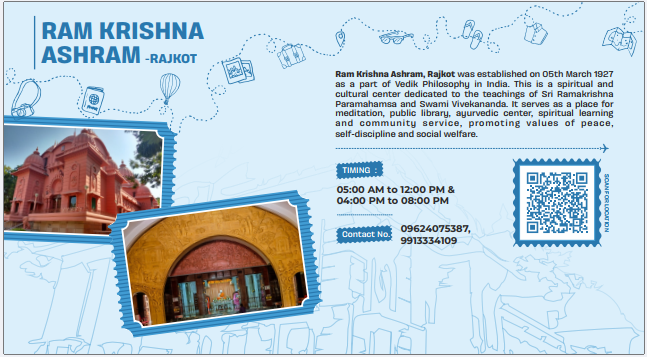
Equally important is the historic Swaminarayan Mandir Bhupendra Road, associated with early Swaminarayan traditions and revered by devotees. For those seeking a quieter, more introspective environment, Ramakrishna Ashram Rajkot offers a space dedicated to meditation, learning, and spiritual development.
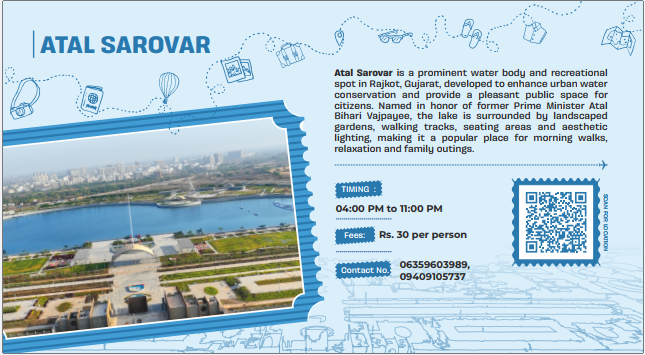
These institutions collectively position Rajkot as a balanced spiritual destination, suitable for both religious tourism and general visitors. Urban Infrastructure and Leisure Spaces One of Rajkot’s key strengths is its well-developed urban planning, reflected in its public spaces and recreational areas. Atal Sarovar is a modern urban lake developed for both environmental conservation and public recreation. With landscaped surroundings, walking paths, and seating areas, it serves as a popular evening destination for both locals and tourists.
The Racecourse Ground is a central recreational zone widely used for walking, jogging, and hosting community events. Nearby, Jubilee Garden adds historical charm and greenery, forming a key social and cultural hub within the city.
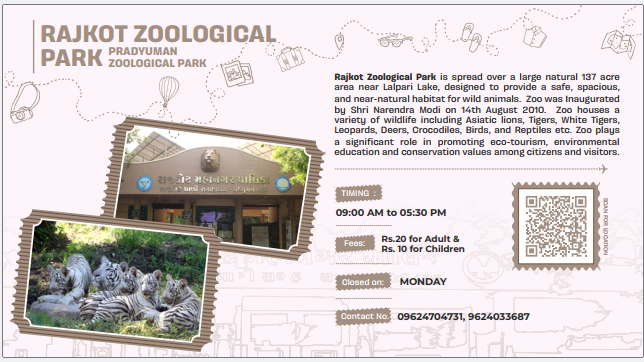
These spaces provide visitors with an opportunity to experience the local lifestyle, beyond structured sightseeing. Wildlife, Nature, and Thematic Attractions Rajkot also offers a variety of nature-based and family-friendly attractions. Rajkot Zoological Park, spread over a large natural area near Lalpari Lake, is designed to replicate natural habitats and houses a range of wildlife including Asiatic lions, tigers, and reptiles. It plays an important role in conservation and environmental awareness.
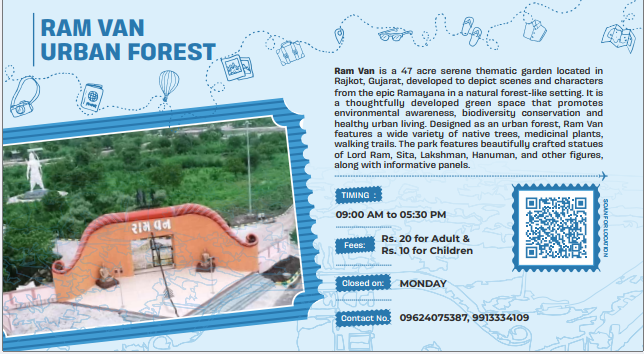
A unique addition to the city is Ram Van Urban Forest, a thematic park inspired by the Ramayana. Developed as an urban forest, it combines mythology, biodiversity, and education, offering a different kind of visitor experience.
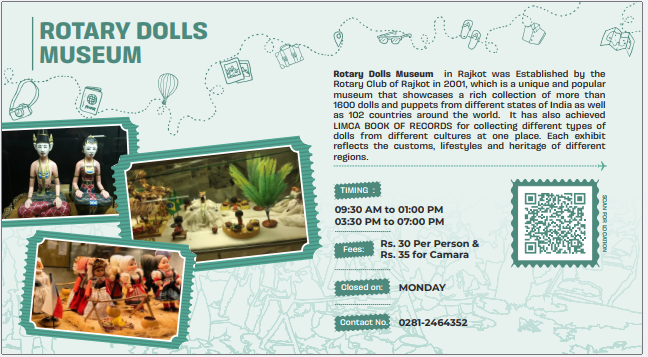
These attractions enhance Rajkot’s appeal as a family-friendly and experiential destination. Museums, Learning, and Interactive Experiences Rajkot distinguishes itself by offering attractions that combine education with entertainment. The Rotary Dolls Museum is one of the most unique museums in India, featuring a collection of over 1,600 dolls from across the world. Each exhibit represents different cultures, making it both visually engaging and educational.
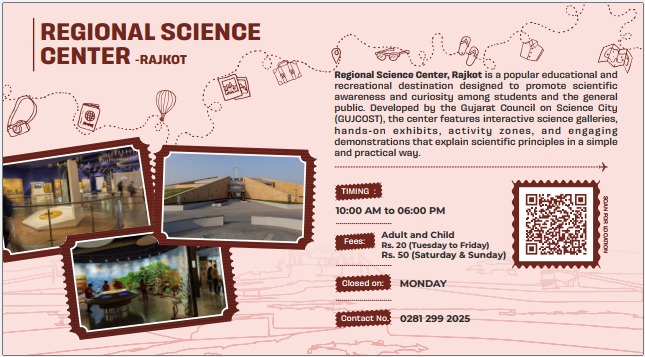
The Regional Science Center Rajkot is another key attraction, designed to promote scientific awareness through interactive exhibits and hands-on learning. It is particularly popular among students and families. Tour Concludes With:A comprehensive experience of Gujarat’s cultural essence—where heritage, spirituality, and modern urban life come together seamlessly, making Rajkot a destination that is both practical and enriching Strategic Importance in Gujarat Itineraries From a travel planning perspective, Rajkot plays a crucial role in Gujarat tourism. Its central location makes it an ideal base or transit point for exploring the Saurashtra region. The city connects conveniently to major destinations such as Dwarka, Somnath, Gir National Park, and Junagadh. For tour operators and planners, Rajkot offers:
This makes Rajkot not just a destination, but a strategic component of broader travel circuits. Ideal Duration and Travel Planning Rajkot is best experienced over 2 to 3 nights, allowing sufficient time to explore its key attractions without rushing. The city’s compact nature ensures minimal travel time between sites, making it ideal for relaxed itineraries.
Why Rajkot Stands Out? Rajkot’s appeal lies in its consistency and balance. It does not rely on a single iconic attraction but delivers a well-rounded experience across multiple categories:
It is a destination that performs reliably across different traveler segments. |
|
| Share this tour package: |

|
||||
 |
||||
|
||||
|


